


What “Normal” Testosterone Levels Really Mean by Age
When you receive lab results, your "total testosterone" is typically measured against a broad reference range—often between 300 and 1,000 ng/dL. However, these numbers are based on population averages that include men of all health statuses and ages. What is considered "normal" for an 80-year-old is vastly different from what is optimal for a man in his prime.
At Level T, we look beyond these generic averages to focus on how you feel and how your levels align with your specific health goals.
Disclaimer: This article is for educational purposes and is not medical advice. Consult with a qualified healthcare provider for advice tailored to your situation.
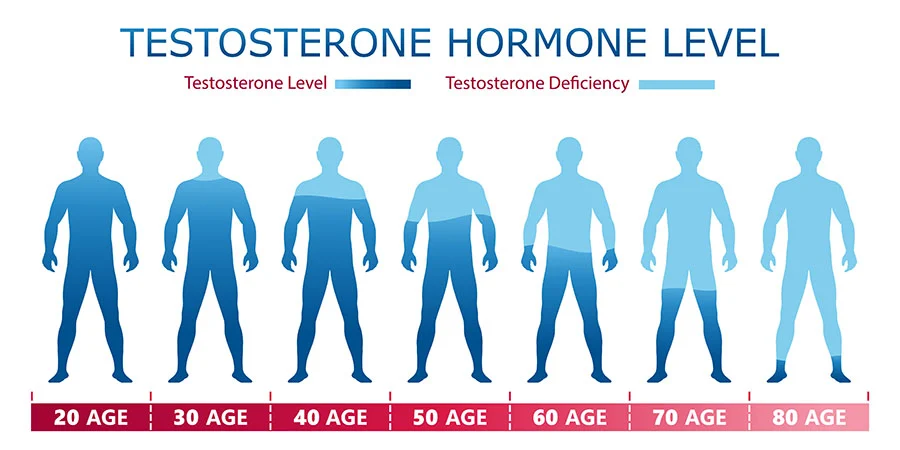
The Testosterone Timeline: What Happens to Your Body Each Decade
Testosterone levels follow a predictable general pattern across adulthood, though the pace and impact of change vary by individual age, health, lifestyle, and baseline hormone levels.
Your 20s: Peak Production
Testosterone production is typically highest from the late teens through the 20s. During this period, higher total testosterone supports muscle mass, muscle strength, libido, and recovery, often establishing baseline levels for later comparison.
Your 30s: Gradual Decline Begins
Testosterone levels typically begin to decline in the early 30s, often at a gradual and steady rate. Some men start to notice lower energy, subtle changes in lean body mass, or shifts in mood and focus, especially when experiencing poor sleep or high stress.
Your 40s: Metabolic Changes Appear
In the 40s, hormone changes may overlap with metabolic shifts. Reduced muscle mass, weight gain, brain fog, and low libido can become more noticeable, though experiences vary widely.
Your 50s and Beyond: Individual Patterns Matter
By the 50s and beyond, testosterone levels vary widely among individuals. Bone density, energy, and overall well-being depend on a person's health history, medical conditions, and lifestyle, so trend tracking is more valuable than individual tests.
Common Symptoms Linked With Low Testosterone
When hormones are out of balance, the symptoms often overlap with those of general aging, causing many men to overlook them.
Common signs of low testosterone include:
-
Fatigue or persistently low energy
-
Reduced muscle mass and muscle strength
-
Weight gain, particularly around the midsection
-
Low libido or diminished sex drive
-
Mood swings or mood changes
-
Brain fog and trouble focusing
-
Poor concentration and reduced motivation
Testosterone, Headaches, and the Brain
The influence of hormones goes far beyond muscle and mood; they are crucial for neurological health.
Many men are surprised to learn about the testosterone headache.
Research indicates that testosterone helps regulate the body's pain threshold and vascular stability. When testosterone levels fluctuate or drop significantly, it can lead to increased neuroinflammation and a higher occurrence of tension headaches or migraines.
Restoring hormonal balance often results in clearer neurological function and a reduction in chronic head pain.
Optimization Strategies: Testosterone Pellets vs. Injections
Testosterone therapy can be delivered using different methods, most commonly pellets or injections. Pellets are small implants placed beneath the skin that release testosterone gradually over time, while injections deliver measured doses at scheduled intervals.
The table below highlights the differences between these two approaches in terms of delivery, consistency, and maintenance.
| Feature | Testosterone Pellets | Testosterone Injections |
|---|---|---|
| Delivery | Slow, steady release | Dosed at regular intervals |
| Hormone Fluctuation | More stable levels | Levels may rise and fall between doses |
| Dosing Control | Less frequent adjustments | Greater precision and flexibility |
| Maintenance | Fewer testosterone treatments per year | Requires consistent scheduling |
The choice between testosterone pellets vs injections depends on individual hormone levels, preferences, and medical guidance.

Lifestyle Factors That Influence Hormone Levels
Although biology is the primary factor, your daily habits also significantly impact your testosterone levels. Your body naturally produces testosterone in a daily cycle, with the highest levels in the early morning.
Factors that can upset this cycle include:
-
Sleep Deprivation: Most testosterone is produced during deep REM sleep; missing out on rest directly lowers your numbers.
-
Chronic Stress: High cortisol (the stress hormone) acts as a natural antagonist to testosterone.
-
Dietary Choices: Micronutrient deficiencies, particularly in zinc and Vitamin D, can hinder the body's ability to synthesize hormones.
Why Understanding Your Levels Is Worth Exploring
Knowing your testosterone levels by age provides clarity. Instead of guessing, lab data offers insight into how hormones may be influencing energy, mood, muscle mass, and daily performance.
Understanding baseline levels and tracking trends over time can support informed decisions around long-term metabolic health and well-being.
Disclaimer: This article is for educational purposes and is not medical advice. Consult with a qualified healthcare provider for advice tailored to your situation.
Frequently Asked Questions

Book Your FREE TRT Consultation Today
Hormonal health requires more than generic solutions—it calls for individualized care guided by clinical expertise.
Level T provides complimentary Testosterone Replacement Therapy (TRT) consultations at our New Caney, Texas location, with same-week availability. During your visit, you’ll meet with a licensed provider, undergo testing, and receive a personalized plan based on your results without pressure or guesswork.
Book your consultation today and take control of your health, energy, and performance.


